
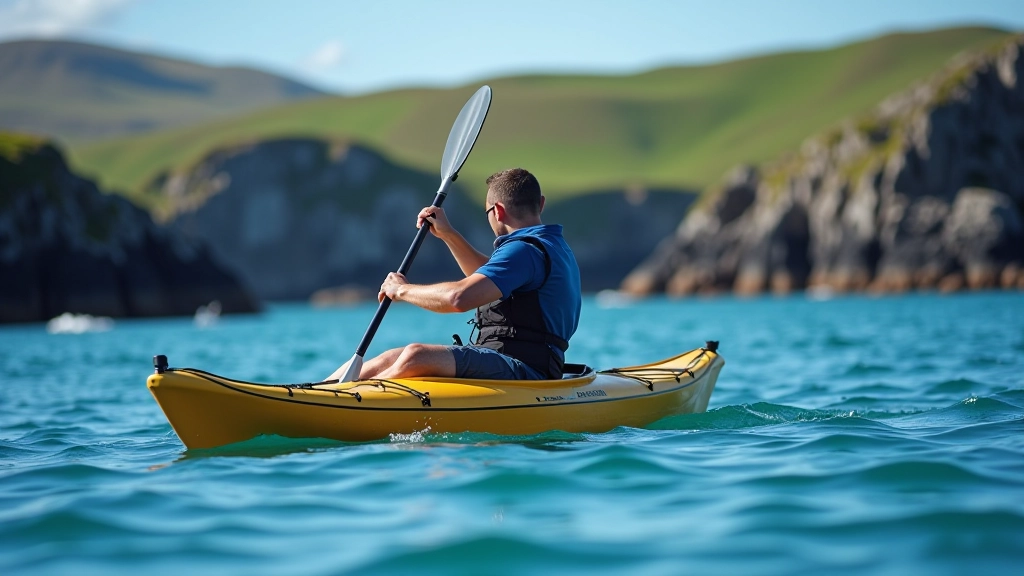
The Paddle: Your Most Important Tool
Before you even get in the kayak, you need to understand your paddle. It's not complicated, but doing it right makes everything easier.
Hold the paddle with your hands roughly shoulder-width apart. Your grip should be relaxed — not tight. A death grip will exhaust your arms within the first hour. Think of it like holding a tennis racket lightly.
Most beginners grip too hard. You don't need to squeeze. Let the paddle do the work.
The blade faces slightly away from you on the forward stroke. When you pull the blade through the water, your elbows should stay relatively close to your body. Wide arm movements waste energy and throw off your balance.
- Hands shoulder-width apart
- Relaxed grip, not tense
- Elbows near your sides
- Smooth, controlled strokes
Posture and Balance Matter
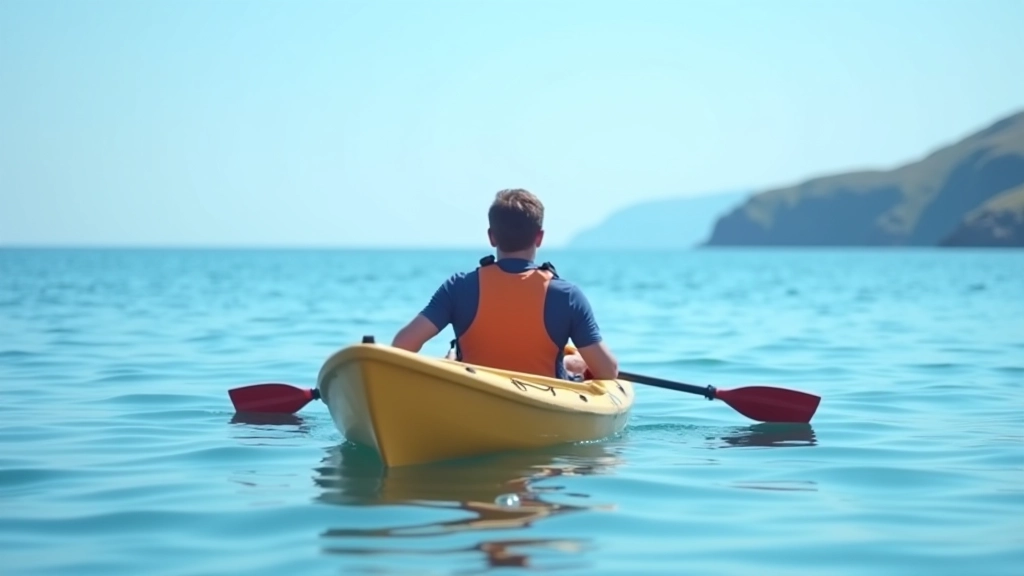
Your seat position matters more than you'd think. Sit upright, not slouched. Your legs should be extended in front of you with a slight bend at the knees. Most kayaks have foot rests — adjust them so your legs aren't fully locked straight.
Your core is working even on calm water. You're not just using your arms. Engage your abdominal muscles slightly. This keeps you stable and lets your paddle strokes come from your torso, not just your shoulders.
On your first trip, you'll probably feel wobbly. That's normal. Sea kayaks are designed to be stable in rough conditions, but in flat water they feel tippier than they are. Don't panic. The boat wants to float you.
Pro tip: If you feel unstable, look at the horizon, not at the water. Your eyes control balance more than you realize.
Your First Strokes
The Forward Stroke
Rotate your torso slightly, not just your arms. Plant the blade in the water about 12 inches in front of you. Pull it straight back past your hip. That's one complete stroke. Repeat on the other side.
Keep It Smooth
You're not sprinting. Smooth, rhythmic strokes are faster and less tiring than powerful, jerky ones. Find a pace you can maintain for 20 minutes without your arms burning.
Course Correction
If you're drifting right, take a few extra strokes on the left side. It's that simple. You don't need special turning strokes yet. Just paddle more on one side.
Most beginners try too hard. You don't need power. You need consistency. A relaxed paddler who keeps a steady rhythm will outpace someone who's thrashing around trying to go fast.
It'll take about 15-20 minutes to find your rhythm. Don't worry if your first few strokes feel awkward. Your body is learning something new. After an hour, you'll feel noticeably more comfortable.
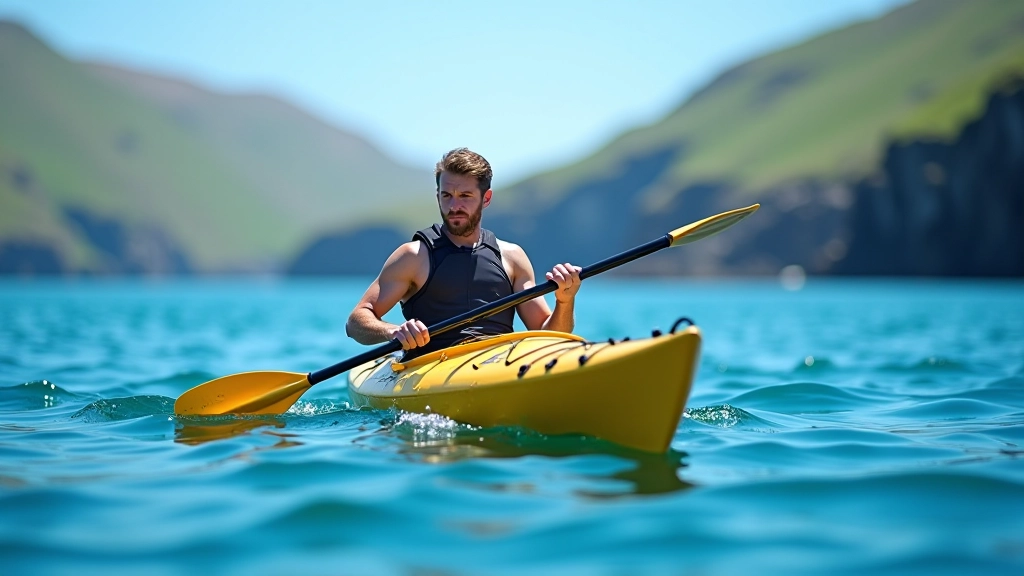
What Happens on a Half-Day Trip
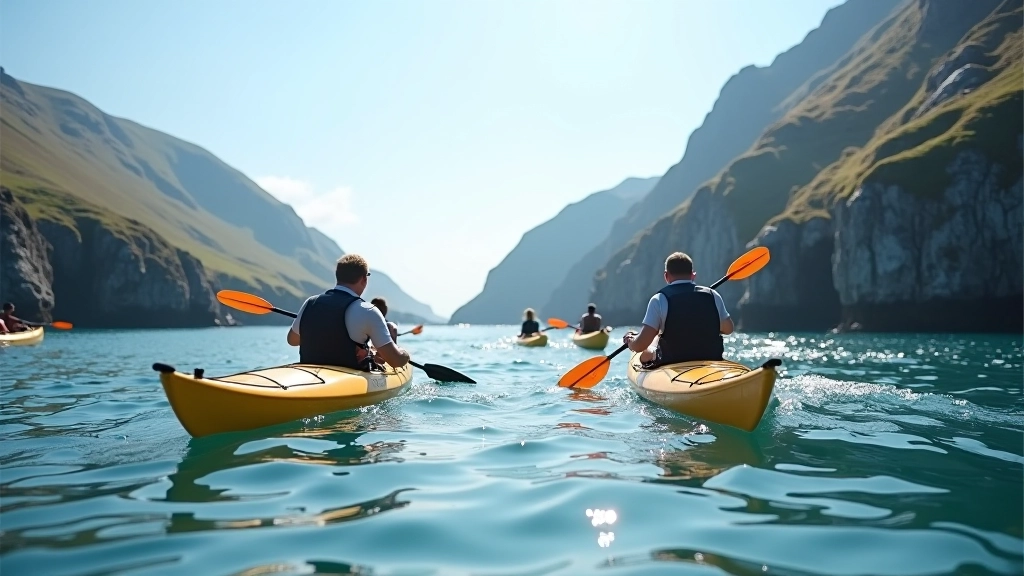
A half-day trip is usually 3 to 4 hours total, including time on the beach before and after paddling. You'll be on the water for about 2 to 2.5 hours.
We start in a sheltered bay where the water is flat and calm. Your guide will give you a safety briefing — how to hold your paddle, basic strokes, and what to do if you tip. Yes, you might tip. It happens to everyone eventually. It's not a disaster. The water is cold but not freezing, and you'll be wearing a wetsuit.
After 30-40 minutes, you'll probably want a break. Your shoulders might feel tired. This is completely normal. We'll find a quiet beach or rock and you can stretch, grab some water, and take a few minutes to recover.
"Most people surprise themselves with how far they paddle. You'll cover 4-5 kilometers without thinking about it."
The Physical Reality
Let's be honest: your shoulders and arms will feel it. Paddling uses muscles you don't normally engage. This isn't pain — it's the feeling of working your upper back, shoulders, and core.
By the end of a 2-hour paddle, most people are tired. But it's a good tired. You're not exhausted. You could paddle again tomorrow if you wanted to. The soreness kicks in the next day — mild stuff in your shoulders and upper back. It disappears after 2-3 days.
Here's what actually happens: your body adapts quickly. If you paddle twice in one week, the second session is noticeably easier. After 4-5 trips over a month, paddling feels natural. You stop thinking about technique and just paddle.
Realistic Expectations
- Tired shoulders after paddling — yes
- Mild soreness next day — yes
- Improved strength after 5 trips — definitely
- You'll feel more confident — absolutely
- You'll want to go back — probably
You're Ready to Try It
Sea kayaking isn't as intimidating as it looks from the shore. The basics are straightforward: relaxed grip, smooth strokes, and trust the boat to float you. Everything else you'll learn by doing.
Your first trip will probably feel like the hardest one. You'll be learning new movements, feeling the water for the first time, and getting used to being in a small boat. But it's also the most memorable. You'll notice things about yourself — your balance, your strength, your ability to adapt to something new.
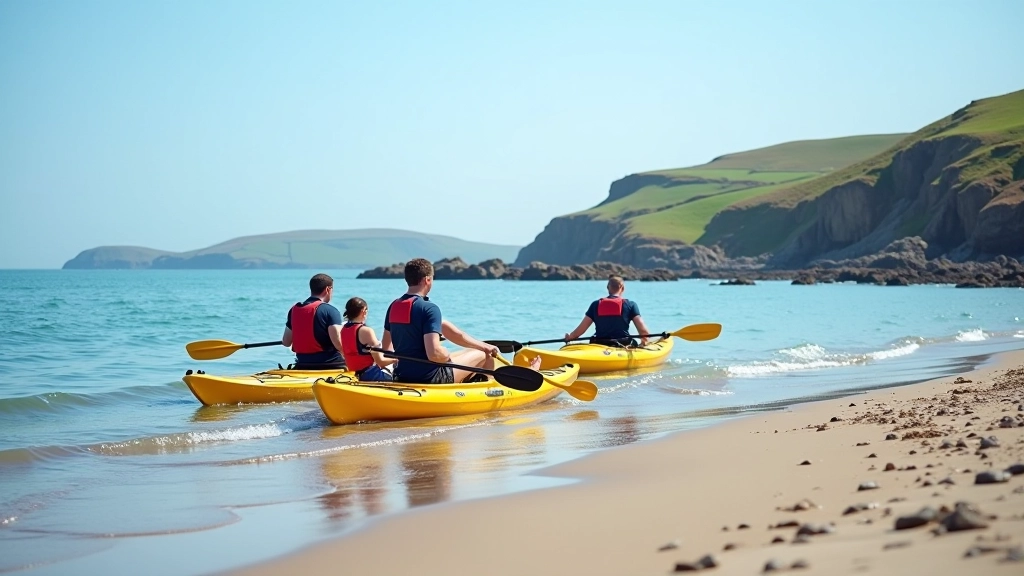
If you're thinking about booking a half-day trip, don't overthink it. Show up, listen to your guide, and let your body figure it out. The Dingle Peninsula's sheltered bays are perfect for beginners. The water's calm, the scenery is stunning, and you'll go home with a story worth telling.
Disclaimer
This guide is for educational purposes and provides general information about sea kayaking fundamentals. Sea kayaking involves inherent risks including but not limited to water hazards, weather changes, and physical exertion. Always paddle with a qualified guide, wear appropriate safety equipment, and follow all safety instructions provided. Individual fitness levels, experience, and physical capabilities vary. Consult with a healthcare provider before beginning any new physical activity. Conditions on the water can change rapidly. Check weather forecasts and local water conditions before paddling.